Why Identifying Wood Damage Matters for Your Rockford Home
If you own a home in Rockford, you've probably heard about the threats lurking in wooden structures: dry rot, termites, and carpenter ants. But here's the problem most homeowners face: these three culprits look similar at first glance, yet they require completely different treatment approaches. Misidentifying the damage could mean wasting money on the wrong repair strategy or, worse, letting the real problem worsen while you're treating the wrong thing.
Understanding the difference between dry rot, termite damage, and carpenter ant damage is the first step toward protecting your investment. Each type of damage tells a different story about what's happening inside your walls, floor joists, and structural beams. The sooner you can pinpoint the exact issue, the sooner you can take action to stop it and prevent costly structural failure down the road.
What Does Wood Rot Look Like? Identifying Dry Rot in Your Home
Dry rot is a fungal infection that breaks down the cellulose in wood, causing it to become brittle, discolored, and structurally weak. Unlike wet rot, which requires constant moisture, dry rot can spread through wood even in relatively dry conditions, making it particularly deceptive. When you're looking for Wood Rot & Dry Rot Repair signs, start by examining areas prone to moisture: basements, crawl spaces, attics, and around windows and doors.
The appearance of dry rot is quite distinctive once you know what to look for. Affected wood typically becomes dark brown or reddish in color, and it may develop deep cracks that form cube-like patterns on the surface. The wood becomes extremely brittle and will crumble easily if you press on it with a screwdriver or your finger. You might also notice a distinctive musty smell, fine dust around the affected area, or white/gray thread-like fungal growth spreading across the wood. Unlike termite galleries, which are clean and smooth, dry rot damage looks rough and crumbly, almost like the wood is turning to powder from the inside out.
Dry Rot vs. Termite Damage: Key Differences Every Homeowner Should Know
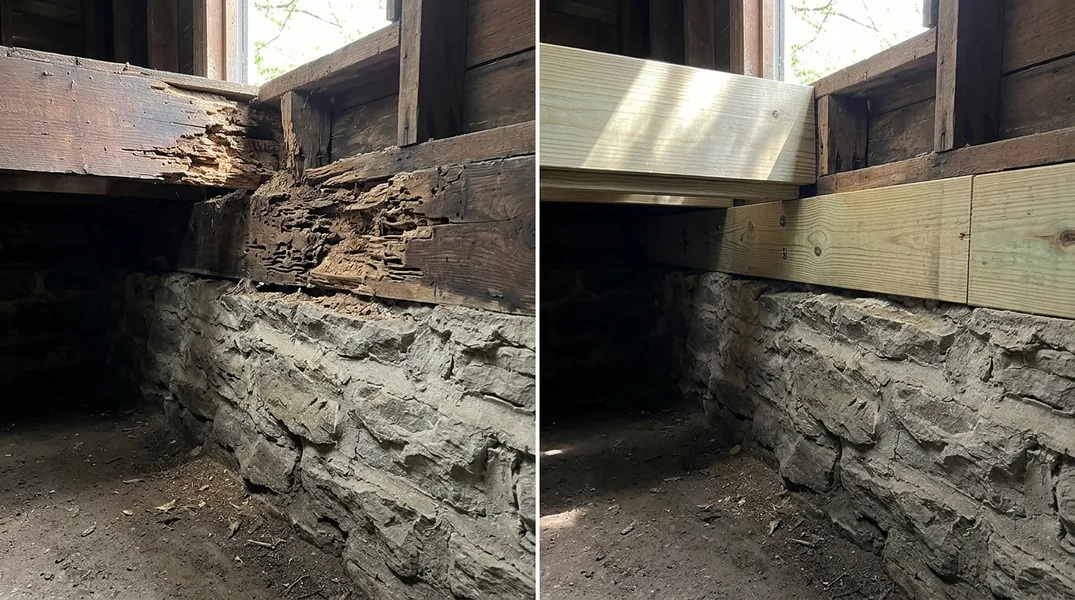
When comparing dry rot vs. termite damage, the distinctions become clearer when you examine the damage pattern and what's left behind. Termites are insects that eat wood for nutrition, leaving behind clean, smooth galleries (tunnels) inside the wood. They often leave a thin shell of wood on the surface while hollowing out the interior, which means damage can be extensive before you notice anything on the outside. Termites also leave behind mud tubes on exterior surfaces as they travel between their colony and your home, and you may find discarded wings near entry points during swarming season.
Dry rot, by contrast, is a fungal process that doesn't leave organized tunnels. Instead, it creates a general breakdown of the wood structure, turning it soft and crumbly throughout. While termites are active and mobile, dry rot spreads slowly through spores and requires moisture to thrive. If you see mud tubes, discarded wings, or perfectly smooth tunnels inside the wood, you're likely dealing with termites. If you see crumbly, discolored wood with a musty smell and no visible insects, dry rot is the more probable culprit. Termite damage often happens faster than dry rot, sometimes causing significant structural compromise within a few years, while dry rot may take longer to develop but can be equally destructive if left untreated.
Carpenter Ant Damage vs. Termite: How to Tell Them Apart
Carpenter ants and termites both tunnel through wood, but their methods and damage patterns are fundamentally different. Carpenter ants are large insects (about one-half inch long) that excavate wood to create nesting galleries. Unlike termites, carpenter ants don't eat the wood for nutrition; they simply remove it to make room for their colony. This means they leave behind very clean, smooth tunnels with almost sandpaper-like walls. You'll often find sawdust or frass (ant droppings) near the entry points and around damaged areas. Carpenter ant damage tends to follow the grain of the wood, and the galleries are typically larger and more organized than termite tunnels.
Termites, on the other hand, actually consume the wood as food, so their tunnels serve a dual purpose: creating space and providing sustenance. Termite galleries are often filled with mud or soil, and you're more likely to find mud tubes connecting the colony to the wood source. Termites also leave no sawdust behind because they eat what they excavate. If you spot large black or reddish-brown ants near the damaged wood, especially in spring or summer, you probably have carpenter ants. If you see mud tubes, small piles of fecal pellets, or evidence of the insects themselves (which are pale and smaller), termites are more likely the problem. Carpenter ant damage vs. termite distinction matters because carpenter ants can sometimes be controlled with targeted treatments, while termites typically require professional intervention and ongoing monitoring.
Signs of Termite Damage in Wood: What to Look For
Understanding the signs of termite damage in wood can help you catch an infestation before it becomes catastrophic. The most obvious sign is the presence of mud tubes on exterior walls, foundation, or crawl space beams. These tubes are about the diameter of a pencil and serve as protected highways for termites traveling between the soil and the wood they're eating. If you see these tubes, especially during spring or early summer, termite activity is likely occurring. Another telltale sign is the appearance of swarmers, which are winged termites that emerge to reproduce. You might find discarded wings on windowsills or near light sources, which indicates that a termite colony is established nearby.
When examining wood itself for termite damage, look for areas that sound hollow when tapped or that feel softer than surrounding wood. Signs of termite damage in wood also include wood that appears to be peeling or blistering on the surface, even though the damage is primarily inside. Unlike dry rot, termite-damaged wood often maintains its color on the surface while being completely hollowed out beneath. You may also notice sagging floors, doors or windows that stick, or visible cracks in drywall, all of which can indicate significant termite activity affecting structural integrity. If you suspect termites in Rockford, it's critical to act quickly, as termites can cause serious structural damage within just a few years.
When to Call a Professional for Wood Damage Repair Near Me
If you've identified what you believe is dry rot, termite damage, or carpenter ant damage in your home, the next step is determining whether you can handle it yourself or need professional help. While minor surface-level damage might seem manageable, wood damage is rarely as simple as it appears on the surface. Fungal spores from dry rot can spread through the air, structural damage from termites can compromise load-bearing elements you can't see, and carpenter ants can have satellite colonies hidden throughout your home. This is why getting a professional assessment is so important.
Rockford Carpentry specializes in identifying and repairing all types of wood damage, including Wood Rot & Dry Rot Repair, Termite Damage Repair, and structural restoration. Our team can accurately diagnose your specific problem, determine the full extent of the damage, and recommend the most effective repair strategy. Whether you need Floor Joist & Subfloor Repair or Beam Replacement & Load-Bearing Wall Removal, we have the expertise to restore your home's structural integrity. Call us at (815) 706-6970 to schedule your free estimate today.
Looking for a professional carpentry contractor in Rockford? Rockford Carpentry responds fast for all your carpentry needs.
Get a Free QuoteOur services: Wood Rot & Dry Rot Repair · Termite Damage Repair · Floor Joist & Subfloor Repair