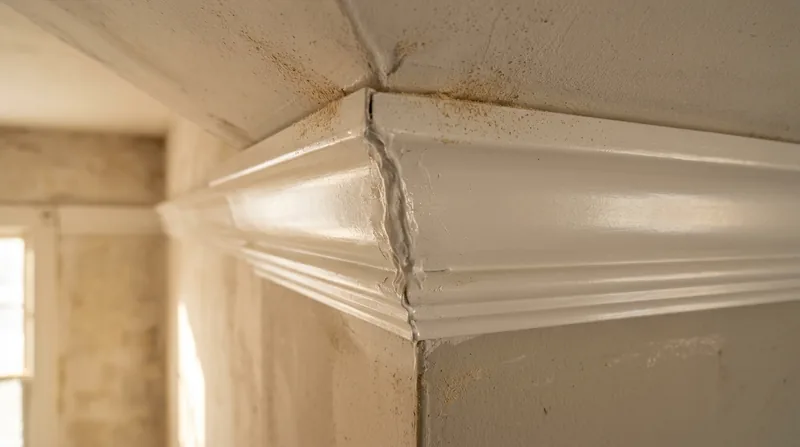




The historic homes of Rockford, Loves Park, and Machesney Park, from the tall-windowed Italianates and Queen Annes of Haight Village to the tree-shaded bungalows of Churchill's Grove and the modest Swedish cottages around Midtown, depend on clean, well-executed trim work to frame rooms and protect walls from moisture and wear. Crown molding and baseboard installation in Rockford is more than decoration: in homes built on fieldstone basements over a century ago, baseboards shield sill plates and rim joists from the damp that rises off the Rock River valley in spring, while crown molding catches dust and hides the gaps where plaster and drywall meet old ceiling joists. We install coped joints, scripted returns, and clean caulk lines that match the period profiles of a 1920s Tudor or sit crisp and modern in a recent renovation. The same carpenter who does your work shows up from start to finish, and we explain what we see in your walls and how the trim protects them.
Why Crown Molding and Baseboard Installation Matters in Rockford's Older Homes
Rockford's building stock runs deep into the 1800s and early 1900s. Stone foundations, wood sill plates, and rim joists in homes on Seventh Street, east of downtown, and throughout the historic neighborhoods are constantly exposed to moisture wicking up from below, especially in the wet springs that follow hard winters and ice dams. Baseboards and proper trim installation create a visual and physical boundary that protects the base of your walls from water damage, furniture scuffs, and the slow decay that turns wood into soft, punky fiber over decades. Crown molding seals the gap where drywall and plaster meet old ceiling joists, reducing dust infiltration and hiding the uneven lines that come with age. In homes with tall ceilings and original plaster, the right molding profile can restore the proportions the architect intended.
- Baseboards protect sill plates and rim joists from moisture wicking and direct water damage, extending the life of the framing beneath.
- Crown molding seals the ceiling-wall joint, reducing dust, drafts, and visible gaps caused by settling and wood movement over time.
- Coped joints and scripted returns allow molding to follow the uneven walls and corners common in homes built before modern framing tolerances.
- Properly installed trim improves the perceived value and finished appearance of rooms, especially in period homes where profile and proportion matter.
- Trim installation is often part of larger renovation work, such as updating a kitchen, finishing a basement, or restoring a historic room.
Getting trim right the first time prevents gaps, nail pops, and caulk cracks that will widen as the house continues to settle and shift with the seasons.
Key info: Homes in Churchill's Grove, Edgewater, and the blocks above the Rock River often have original crown molding and baseboards from the 1920s-1940s. Matching the existing profile or restoring damaged sections requires careful measurement, a steady hand, and knowledge of period-appropriate coping techniques that most handymen skip.
For more on how moisture and settling affect wood trim in older homes, see our wood rot and dry rot repair page.
How We Install Crown Molding and Baseboards in Rockford: Our Process
Every trim job starts with a site visit to measure the room, check for out-of-square walls and uneven ceilings, and understand what you're matching or replacing. We take photos of existing profiles if you're keeping them, assess the condition of the walls and ceilings where the trim will land, and identify any moisture issues or structural concerns that might affect the installation. Then we order material, cut and fit each piece in place, use coped joints at inside corners (never simple mitered joints that will open as the wood moves), and finish with carefully applied caulk and paint or stain that you choose. The work is done by the same carpenter throughout, so there's no handoff and no guessing about what was meant.
- We measure and document the room dimensions, wall angles, and ceiling height, noting any uneven or out-of-plumb surfaces that will affect fit and finish.
- We select material that matches your existing trim profile or meets your design preference, sourcing from local suppliers when possible.
- We cut and fit each piece on site, using coped joints at inside corners and scripted returns at outside corners to ensure gaps close as wood seasons.
- We nail the trim with finish nails set below the surface, then fill nail holes and caulk seams with paintable caulk applied in a thin, smooth line.
- We prep the trim for paint or stain, sand as needed, and coordinate with your painter or finish the work ourselves if that's what you prefer.
The result is trim that looks built in, not applied, and that will stay tight as your house moves through the seasons.
Example: A 1950s ranch in Rolling Green had mismatched baseboards and no crown molding. The walls were slightly out of square and the ceiling dipped near the northeast corner. We installed 3.5-inch baseboards with coped joints throughout, added 4.5-inch crown molding with scripted returns at the corners, and used paintable caulk to hide the gaps where the walls met the trim. The homeowner painted everything in a soft white, and the room felt finished and proportional for the first time in decades.
See our finish and trim carpentry page for related work like door casing, window trim, and wainscoting.
Crown Molding and Baseboard Installation Methods
| Approach | Description | Best for |
|---|---|---|
| Coped Joint Installation | Cut the end of one piece to match the profile of the other, creating a tight, interlocking joint that closes as wood moves and seasons. | Inside corners in all homes, especially older ones where walls are out of square or corners are not 90 degrees. |
| Scripted Return Corners | Shape the end of molding to follow the profile of the trim, then miter and return it to the wall, creating a finished look at outside corners and doorways. | Outside corners, doorways, and where trim ends at a wall or opening in period or high-end homes. |
| Paint-Grade Installation | Poplar or pine trim installed with finish nails, caulked at all seams, sanded smooth, and primed and painted to a uniform finish. | Modern homes, kitchens, bathrooms, and any room where a clean, seamless painted finish is the goal. |
| Stain-Grade Installation | Clear wood such as oak, maple, or cherry installed with pocket holes or mortise and tenon joinery, sanded to 150-grit, and finished with stain and polyurethane. | Formal rooms, built-ins, and homes where wood grain and natural finish are part of the design. |
| Profile Matching | Measure and replicate the original molding profile from existing trim, sourcing material from specialty mills if needed to match 1900s or 1920s patterns. | Historic homes in Haight Village, downtown Rockford, and Churchill's Grove where original trim must be matched or restored. |
Crown Molding and Baseboard Installation Cost in Rockford: What to Expect
The cost of crown molding and baseboard installation in Rockford starts at $450 for a single room with straightforward geometry, standard paint-grade material, and no complications. That covers measurement, material, installation, caulk, and finish nail work. Larger rooms, multiple rooms, coped joints, stain-grade wood, or the need to match an existing profile will increase the price. A typical living room or bedroom with crown and baseboard might run $900 to $1,800 depending on linear feet, material choice, and the condition of the walls and ceilings. A whole-house project or high-end stain-grade work can easily exceed that. The best way to know what your job costs is to get a free, on-site estimate from a carpenter who will walk the space with you and explain what's involved.
Factors that affect the final price include the linear footage of molding needed, the complexity of the room's geometry (how many inside and outside corners, doorways, and openings), the material grade and finish (paint-grade poplar versus clear oak or cherry), whether you're matching an existing profile or installing new trim, and any prep work needed on the walls or ceilings before trim goes up. If your walls are badly damaged or your ceilings are very uneven, we may need to recommend repair or leveling work first, which adds cost but ensures the trim will look right and stay tight.
See our pricing page for a full breakdown of trim work costs and what's included in a standard estimate.
Real example: A kitchen renovation in Machesney Park required 65 linear feet of 3.5-inch painted baseboard and 48 linear feet of 4.5-inch painted crown molding, with eight inside corners, two outside corners, and three doorways. Material was pine, joints were coped, and caulk was applied throughout. The job ran $1,350 and took two days. The homeowner painted it themselves, saving labor cost and getting exactly the color they wanted.
What to Look for When Hiring a Carpentry Contractor Near Rockford for Crown Molding and Baseboard Work
Hiring a carpenter for trim work is not the same as hiring a general handyman. Trim requires skill with hand tools, an understanding of wood movement and seasonal changes, and the ability to cut and fit joints that will stay tight. When you're looking for a contractor near Rockford or in surrounding areas like Belvidere, Roscoe, or Cherry Valley, ask to see examples of coped joints and finished trim work. A good carpenter can explain why a coped joint is better than a mitered joint, why caulk matters, and how paint and stain affect the final look. Check references, especially from recent trim jobs, and ask how long the contractor has been doing finish carpentry. Get multiple estimates so you understand the range of pricing and approach. If your home is in a historic district or you're doing work on a protected property, ask your local building department about any requirements or approvals needed before work begins.
- Verify that the contractor is fully insured and can provide a current certificate of insurance before any work starts.
- Ask for three to five references from homeowners who had crown molding or baseboard installed in the past two years, and follow up with at least two of them.
- Request photos or samples of coped joints, scripted returns, and finished trim work to confirm the quality and attention to detail you expect.
- Discuss material choices, finish options, and the timeline clearly before signing a contract, and make sure the estimate itemizes labor, material, and any additional costs.
- If your home is in a historic neighborhood or subject to HOA rules, ask the contractor if they have experience with those requirements and what approvals or permits may be needed.
A carpenter who takes time to understand your home, your style, and your budget will deliver trim that looks built in and lasts decades.
Ready to get started? Contact us for a free estimate or call (815) 706-6970 to discuss your trim project.
Crown Molding & Baseboard Installation in Rockford: Pricing Guide
| Service | Price | Details |
|---|---|---|
| Single room, paint-grade baseboards | Starting at $450 | Includes measurement, material, installation, caulk, and finish nailing for one room up to 12 linear feet |
| Crown molding and baseboards, standard room | $900 to $1,800 | Typical living room or bedroom with coped joints, paint-grade material, and standard wall and ceiling condition |
| Stain-grade or profile matching | $1,200 to $2,500+ | Clear wood, specialty mill sourcing, or matching historic profiles from 1900s-1920s homes; price varies by material and complexity |
| Whole-house or multi-room project | On estimate | Scope, material, and coordination with other trades require a site visit and detailed proposal before pricing |
| Travel and estimate | Free | No charge for on-site visit and written estimate; response within 24 hours in Rockford and surrounding areas |
Indicative pricing, the exact cost depends on square footage, finish, and site access. Free personalized estimate within 24h at (815) 706-6970.


