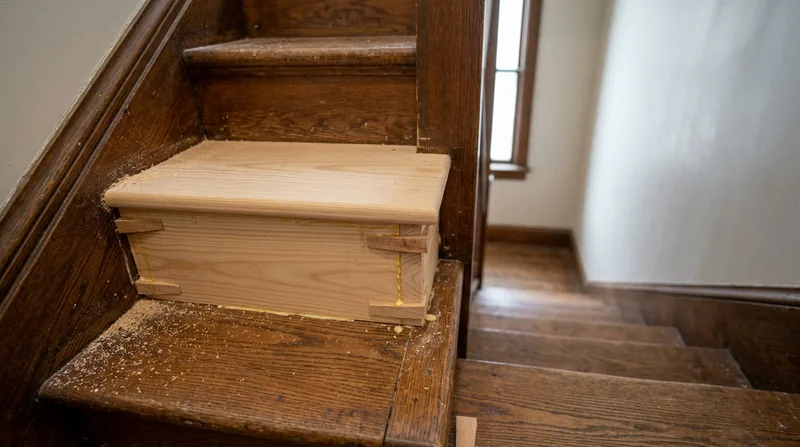




Stair & Railing Repair in Rockford keeps the staircases in our two-story Victorians, bungalows and split-levels safe and steady underfoot. From the basement flights that descend into stone-foundation cellars to the main-floor landings that divide our Queen Anne and Colonial Revival homes, stairs take daily traffic, seasonal wood movement, and the freeze-thaw cycles that loosen treads and shift stringers. When balusters rattle, treads creak, or handrails pull away from newel posts, the repair is straightforward carpentry, not replacement. We rebuild worn stringers, reglue and reface treads, restore period railings in Haight Village and the historic east-side blocks, and install modern handrails where code or safety calls for them.
Why Stair & Railing Repair Matters in Rockford's Historic and Aging Homes
Rockford's housing stock spans 150 years, from 1870s Stick-style homes with narrow basement stairs to 1950s ranches with open-tread designs and contemporary subdivisions with engineered stairs. All of them move. Wood shrinks and swells with humidity; freeze-thaw cycles heave porch footings and loosen fasteners; and decades of footsteps wear treads and compress stringers. In basements, where rim joists and sills wick moisture from stone foundations, stair wood absorbs dampness and can develop soft rot in the lower stringers and treads. Loose railings and squeaky steps are not cosmetic, they are structural feedback that fasteners are working loose or wood is shifting.
- Loose treads and risers indicate fastener failure or stringer deflection and can worsen if left unaddressed.
- Squeaking usually signals differential wood movement between treads and stringers, fixable by tightening or shimming from below.
- Worn or damaged balusters and newel posts are a safety hazard and often require replacement or reinforcement before they fail under body weight.
- Damp basement stairs on the north or riverside side of Rockford homes can develop soft rot in the grain, especially in older Douglas fir or hemlock stringers.
- Period handrails in historic homes often need repair to meet modern code while preserving the original profile and joinery.
Addressing these issues early prevents falls, protects your home's resale value, and keeps the stairs functional for the life of the house.
Local example: A 1920s Tudor Revival home in Churchill's Grove had a basement staircase with loose treads and a soft lower stringer due to moisture wicking from the limestone foundation. We reinforced the stringer by sistering a new pressure-treated board alongside it, reglued and fastened the treads from below, and installed a modern handrail to meet code. The original newel post and balusters stayed in place.
For guidance on when stair repair qualifies as structural work requiring a permit in Rockford, check with the Rockford Building and Zoning Department.
How We Repair and Rebuild Stairs in Rockford Homes
Every staircase is different. An open-tread 1950s basement flight in a Loves Park ranch responds to different repair logic than a closed-string Victorian flight with turned balusters and a mahogany handrail in a downtown Rockford mansion. We start by identifying what is loose, worn, or damaged, assess whether the stringer is sound or needs reinforcement, and then choose repair over replacement whenever the wood and joinery justify it. Most squeaks and loose treads are fixable without removing the entire staircase.
- We inspect the stringer from below and above, checking for rot, deflection, loose fasteners, and moisture damage.
- We reglue loose treads and risers using construction adhesive and mechanical fasteners (screws or bolts) from underneath to avoid visible holes.
- We tighten or replace balusters, newel posts, and handrails, restoring original profiles where the home is historic.
- We reinforce soft or damaged stringers by sistering a new board alongside the original, preserving the staircase structure and appearance.
- We install code-compliant handrails on basement stairs or where safety requires them, matching period style when the home warrants it.
The goal is a staircase that is solid, safe, and true to the home's character.
Rockford example: A two-story 1910s bungalow in Midtown had a main-floor staircase with creaky treads and a loose newel post. The stringer was sound. We reinforced the fasteners from below, reglued the treads, tightened the newel post bolts, and replaced three damaged balusters. The work took one day and cost a fraction of replacing the entire flight. See our finish carpentry service for custom railing and trim work.
| Repair Approach | Description | Best For |
|---|---|---|
| Tread and Riser Regluing | Remove loose treads, clean old glue, apply construction adhesive and fasteners from below, reinstall without visible hardware. | Squeaky stairs with sound wood and intact joinery. |
| Stringer Reinforcement (Sistering) | Bolt a new pressure-treated or solid wood board alongside a soft or deflected stringer to restore structural capacity. | Basement stairs with moisture damage or old stringers showing soft rot in the grain. |
| Baluster and Newel Repair | Tighten loose balusters, replace cracked or split ones, reinforce newel posts, restore period turnings or profiles. | Historic railings and modern safety upgrades without full replacement. |
| Handrail Installation | Install code-compliant handrails on basement flights or main stairs, matching period style or choosing modern profiles. | Older homes without handrails, accessibility upgrades, or safety requirements. |
| Tread Replacement | Remove a worn or damaged tread, mill a new one to match the original profile and finish, reinstall with glue and fasteners. | Isolated tread damage on otherwise sound stairs, especially in visible main-floor flights. |
Stair & Railing Repair Cost in Rockford: What to Expect
Stair and railing repairs in Rockford typically start at $600 for basic tread regluing and baluster tightening on a short basement flight. A full main-floor staircase with multiple loose treads, a reinforced stringer, and new balusters usually runs $1,500 to $3,500, depending on the complexity of the joinery, the condition of the wood, and whether period restoration is required. Handrail installation adds $300 to $800 per flight. Basement stairs with soft rot in the stringers, requiring sistering, typically cost $1,200 to $2,500 for a full repair.
The factors that move cost upward are the extent of damage, the need for custom milling to match period profiles, access difficulty, and whether the staircase is enclosed or open. A Victorian flight with turned balusters and a mahogany handrail in downtown Rockford costs more than a simple basement flight in a ranch. Getting two or three estimates from local carpenters is smart practice, so you can compare scope, materials, and timeline. See our full pricing overview for more detail on how we structure estimates.
If you suspect soft rot or structural damage in the stringer, we recommend an on-site inspection before we quote, because the repair scope may shift once we see the wood grain and fastener condition. Call (815) 706-6970 for a free estimate, and we will give you a clear range and timeline.
Stair & Railing Repair Near Me: What to Look for When Hiring a Rockford Carpenter
Finding a reliable local carpenter for stair and railing work means checking three things: whether they carry full insurance and can show a current certificate, whether they can provide references from recent stair repair jobs in Rockford or the surrounding communities like Machesney Park or Belvidere, and whether they understand period restoration if your home is historic. Ask whether the repair will require a permit from the Rockford Building Department. Some structural stair repairs or significant handrail installations do require a permit, and your carpenter should be familiar with local code and the approval process.
- Request proof of full insurance coverage and ask what it includes for liability and property damage.
- Ask for at least two references from homeowners in Rockford or nearby towns who had stairs repaired or railings installed in the past two years.
- Confirm that the carpenter can source period-correct balusters, newel posts, or handrails if your home is 1920s or older.
- Ask whether the scope of work requires a building permit and whether the carpenter will coordinate with the city or county for you.
- Clarify the timeline, deposit terms, and whether the carpenter guarantees the work for a set period after completion.
A good local carpenter will explain the problem in plain language, show you options that range from minimal repair to full replacement, and recommend the most honest choice for your budget and home. Contact us for a free estimate and to discuss your staircase or railing concerns.
Stair & Railing Repair in Rockford: Pricing Guide
| Service | Price | Details |
|---|---|---|
| Basic tread and riser regluing | Starting at $600 | Tightens loose treads and risers on short basement flights without structural damage to the stringer. |
| Main-floor staircase repair | $1,500 to $3,500 | Includes multiple loose treads, baluster tightening or replacement, and handrail work on a full flight. |
| Stringer reinforcement (sistering) | $1,200 to $2,500 | Adds a new pressure-treated board alongside a soft or deflected stringer to restore load capacity. |
| Handrail installation | $300 to $800 per flight | Code-compliant handrail in modern or period style, including brackets and fastening to the staircase. |
| Custom tread milling and installation | $400 to $900 per tread | Replaces a single worn or damaged tread with new wood milled to match the original profile and finish. |
| Free estimate | No charge | On-site inspection and written quote within 24 hours at (815) 706-6970, no obligation to book. |
Indicative pricing, the exact cost depends on square footage, finish, and site access. Free personalized estimate within 24h at (815) 706-6970.


